
Years at the same level is not a talent problem. It is a recipe problem.
There is an exact recipe for every movement in dressage. You have simply never been handed one, and being stuck for years is the entirely predictable result.

Dressage Mastery Academy is Natasha Althoff's step-by-step recipe book for dressage: the exact sequence for every movement, from your very first test to Grand Prix. Plus a personalised six-week plan she builds for you after watching you ride.
- A precise, step-by-step recipe for every movement at your level, not “more leg, more bend, feel it”
- A personalised six-week plan built around the one thing actually holding you back
- Someone in your corner on the six days a week your coach isn't there
- Progress you can see on the sheet, and riding that's fun again
You have a lesson on Tuesday. Then you’re on your own until next Tuesday.
And nobody in this sport ever talks about those other six days, which is strange, because that’s where nearly all of your riding happens.
The lesson that evaporates
With your coach standing there, it comes together. You feel it. Then they drive off, and by Thursday you can't remember whether it was the inside rein or the outside leg, and you're back to guessing.
The six silent days
Tuesday it won't come together and there's no one to ask. Saturday you school the same thing five times and still can't tell if it was right. Then the quiet drive home, wondering if you actually went backwards this week.
The sheet that says the same thing
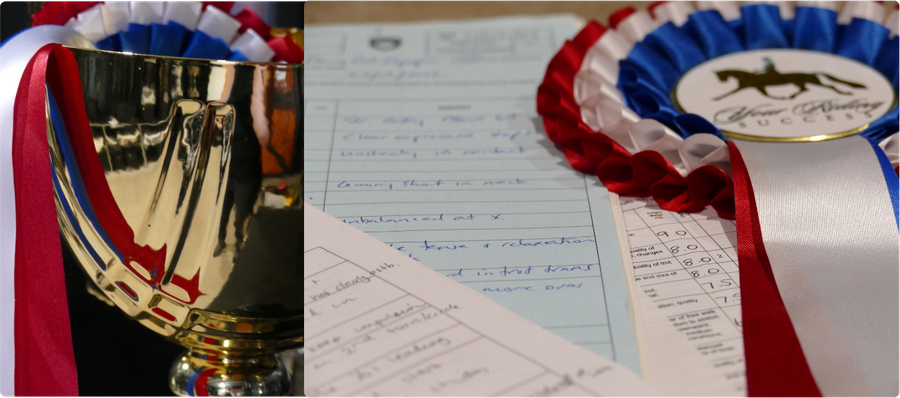
“Not through enough.” “Behind the bit.” “Contact needs to improve.” You've read those words so many times you could write the sheet yourself, and you still have no idea what to do differently on Monday morning.
- You go looking on YouTube after a bad schooling session. You take notes. It feels clear, right up until you get on, and then it dissolves.
- You stop experimenting between lessons, because getting it wrong on your own feels worse than doing nothing.
- You save every question for the next lesson, and hand the whole problem back to your coach.
- They say “you’re improving, the judge just caught you on a bad day”… and you want to believe them, but the scores haven’t moved in three years.
- And then, at about 2am, the thought you never say out loud: “Maybe I’m just not good enough at this.”
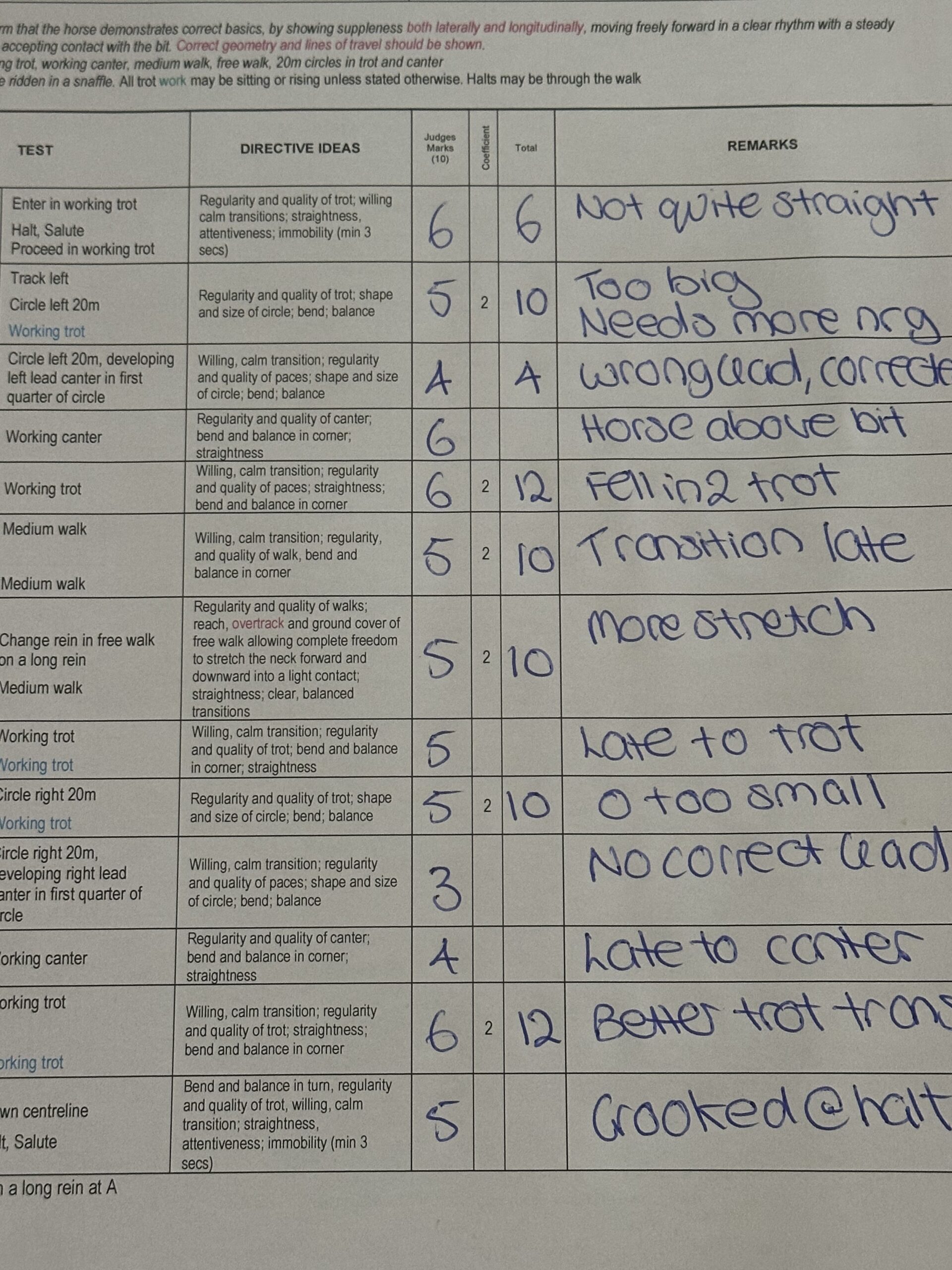
The same comments, season after season“Not quite straight. Horse above bit. Transition late.Needs more energy.” You didn’t need the sheet. You could have written it in the car park.
Your coach sees about one ride in five.
You’re not failing to progress because of what happens in the lesson. You’re failing to progress because of what happens in the four rides after it.
in a year
completely on your own
Forty is being generous, by the way. That’s a lesson most weeks, allowing for holidays, a coach who travels, a horse who pulls a shoe, and the fortnight it rained. Everything else is you, alone.
And here’s how that cycle runs. You have a lesson and it goes well, so you move up. Then you ride four times on your own without a clear plan, not quite sure what you’re working on, and you drift back down. Next Tuesday your coach pulls you back up to where you were.
Up. Down. Up. Down. Week after week, year after year.
That’s not a talent problem. That’s a structural one. Riding is the only thing in the world we’re expected to master completely on our own. A dancer has a studio full of people. A swimmer has a squad and a coach every single swim. You’ve got a paddock, a horse, and six days of silence.
Of course it drifts. Not because you aren’t trying, but because there is nobody there to say “yes, that’s it, keep going,” or “leave that today, it isn’t the problem.”

The ride you have when nobody’s watchingCircle. Change the rein. Circle. Try the thing from the lesson. Try it again. Get off not really knowing whether that was a good ride or a wasted one.
Either because they don’t know it themselves, or because it doesn’t suit them for you to know it.
There is nothing wrong with your riding. There is nothing wrong with your horse. You’ve just been using the wrong recipe, and no amount of effort fixes a wrong recipe.
The reason you’re stuck is not
- Talent. You either have “feel” or you don’t, and you don’t.
- Your horse. He’s given everything he’s got and there simply isn’t any more.
- More lessons. You’ve had years of them.
- More effort. You’re at the stable four or five days a week already.
- A better saddle, a new bit, a different coach, a nicer horse.
- Time. Another season is not going to do it on its own.
You were handed a three-thousand-piece puzzle, and never once shown the picture.
A piece at a clinic. A piece off a video. A piece in Tuesday's lesson. Thousands of little pieces, all face-down and grey, and no image on the box to tell you where any of them go. So you pick them up one at a time and hope.
Dressage is not a three-thousand-piece puzzle. It is only ever eight pieces: the same eight, whether your horse is three or thirteen, whether it's your first prelim test or Grand Prix.
Tips, exercises, clinic notes, half-remembered corrections. All of it true. None of it in an order you can actually ride.
When you know which piece you're in, you know exactly what to fix. No more guessing. No more going around in circles.
The best riders never had to work it out, so they can't tell you how.
Great riders ride on instinct and feel. Nobody ever made them break it down, so when you ask, what comes out is “half halt,” “more leg,” “more impulsion,” “straighten him up.”
It's the difference between a recipe that says “add an egg” and one that tells you how to crack it. Coaches don't go to communication school. They learn to ride, they learn to win, and then they're handed a rider and expected to translate something they've never had to put into words. That's a gap in their training, and you have been paying for it.
A rider who can train herself doesn't need to book as many lessons.
There has never been much incentive in this industry to make you independent. A rider who leaves every session able to recreate it on her own is a rider who needs the diary less often.
That's not an accusation against your coach. Most of them have never thought about it for a second. It's a description of how the whole sport is set up. But it does explain why, after all these years, nobody has ever handed you the actual steps.
“Ride the energy back to front” is not an instruction. It’s a description.
Here’s the single most common problem in early-level dressage, getting your horse connected and on the bit, written the way you’ve always been told it, and then written the way Natasha teaches it.
- “Ride him from back to front.”
- “More impulsion. Get him in front of your leg.”
- “Soften. Don't pull. Give with the inside rein.”
- “There! Feel that? That's it, keep that.”
Every word of that is correct. And not one word of it tells you what to do on Thursday when he's leaning and you're alone.
- Create the energy. The horse's legs have to be actively moving. Not fast. Active.
- Catch the energy. Pick up a contact with the horse's mouth so the energy has somewhere to arrive.
- Check the contact is even. Fifty per cent in the left rein, fifty in the right. If it isn't even, move his body and neck until it is.
Do those three things correctly and the horse will be connected. There's no grey area, no guesswork, and no moment where you have to hope you felt the right thing.
Natasha didn’t build these because she’s gifted. She built them because she isn’t. In her own words: “I can’t cook to save myself.” Give her a recipe that says “three eggs” and she’s lost. Give her one that says how to hold the egg, where to crack it and how to separate the shell, and she’ll make you a perfectly good chocolate cake.
It doesn’t make her a chef. It makes her someone who can follow a recipe. And that, it turns out, is the entire difference between a rider who moves up the levels and a rider who doesn’t.
Because here’s the part that stings: if the recipe is wrong, being a better cook doesn’t help. Thirty eggs, no sugar and a quarter cup of flour will never be a chocolate cake, no matter how beautifully you whisk it. And if you’ve been mixing harder and harder for four years and it still isn’t working, please stop concluding that you’re the problem.
This is the whole of dressage. All of it. On one page.
Four things the horse is doing, four things you are doing. Natasha rides Grand Prix off this wheel and nothing else, because everything else is already a recipe she knows by heart.

The Rider Intuition Wheel, taught in full inside Dressage Mastery Academy
Every single ride, at every single level, this is the entire loop running in her head:
- Is he straight and soft? Yes or no.
- Do I have connection? Yes or no.
- If yes and yes, add power.
- Did adding power cost me the softness, the straightness or the connection? If it did, go back and catch it.
- If it didn't, add more. Then take the energy upwards instead of forwards. That's collection.
Now look at the left half of that wheel, because this is the half nobody teaches at all. The rider has a mind and the rider has a body: the upper body, the lower body, the thinking framework, and being in the zone.
No dressage handbook anywhere tells you what you should be thinking, moment to moment, while you ride. So instead your head fills up with what the horse is doing, what your body is doing, where you’re going, the rhythm, the line, the transition in four strides, the transition that went wrong last time you were here, and the judge’s comments from your last three tests, all at once, all equally urgent.
That is an enormous load, and when everything feels equally important, nothing gets done well. So you freeze. Or you override. Or you revert to habit and then wonder why the same problems keep showing up.
The fix was never more information. It was less of it, in the right order. Step one, then step two, then step three. The noise quietens. Your body can follow an instruction it can actually hear. And your horse finally gets a rider who knows what she’s asking for.
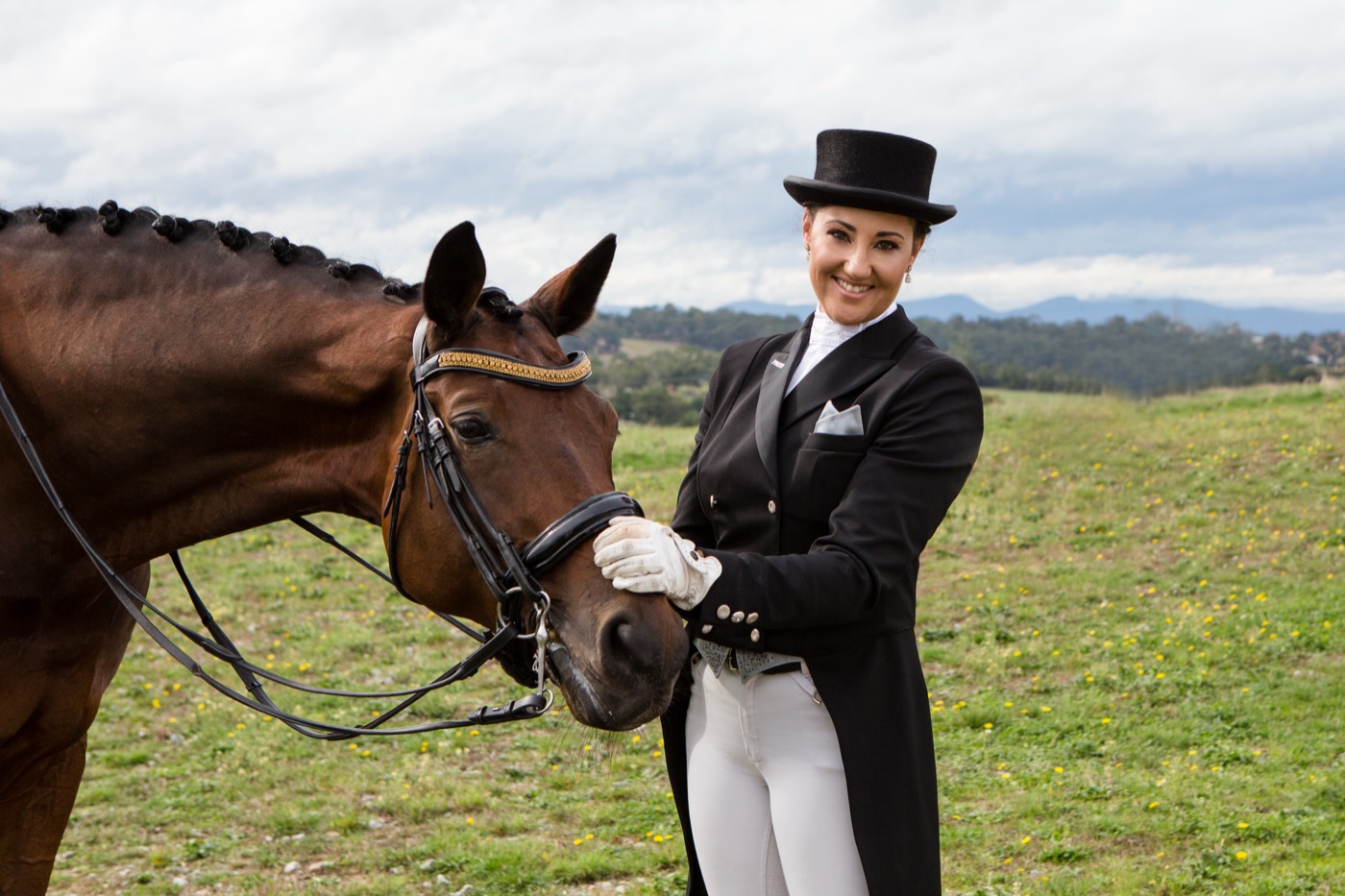
I'm probably a less talented rider than you are... but that's what makes me an incredible coach
I mean that. Most riders are more naturally talented than me. I couldn't feel the right diagonal. I couldn't get my horse on the bit. Nothing about riding ever came to me by instinct, so I had to reverse-engineer every single step just to keep up.
I remember being in the group lesson watching all my friends graduate into the advanced group because they could rise to the trot, and I couldn't. It broke me. I remember pony club, everyone moving up, me still fighting to get my horse on the bit.
I remember a preliminary competition where my horse took off with me, and afterwards the officials rang my coach and asked whether they needed to ban me from competing for six months. And my coach turned to me and said, “I had to promise the governing body I'd get you under control. You embarrassed me. Why didn't you control your horse?”
I cried litres of tears in my horse float. And when I couldn't cry in the float, because my mum or my partner was there, I'd say I was going to the toilet, shut the door, and cry without making a sound so the people in the other stalls wouldn't know it was me. Then I'd take the toilet paper and dry my eyelashes, because people can always tell you've been crying if your eyelashes are wet.
So when I say I know exactly where you are, I'm not being kind. I remember it.
I'm not a Grand Prix rider because I'm gifted. I'm a Grand Prix rider because I'm relentless, and because in the face of nobody giving me a straight answer, I went and found one. I asked the questions that made European trainers shout at me. I wrote down every step. I got my husband, who knows nothing about horses, to study what a clean flying change looks like so he could call them for me, because I couldn't feel them.
And it worked. I took a Friesian cross Thoroughbred to Inter II. Then I took a Friesian stallion all the way to Grand Prix, the first person in Australasia to do it. On three rides a week. On a horse that wasn't expensive, that I bought because he could bow, and who they told me would fall over if I tried to canter him.
It took me twenty years and more money than I want to write down. I travelled the world. I took my family out of their home and moved them to Europe so I could learn. You shouldn't have to do any of that. That's the whole point of this.
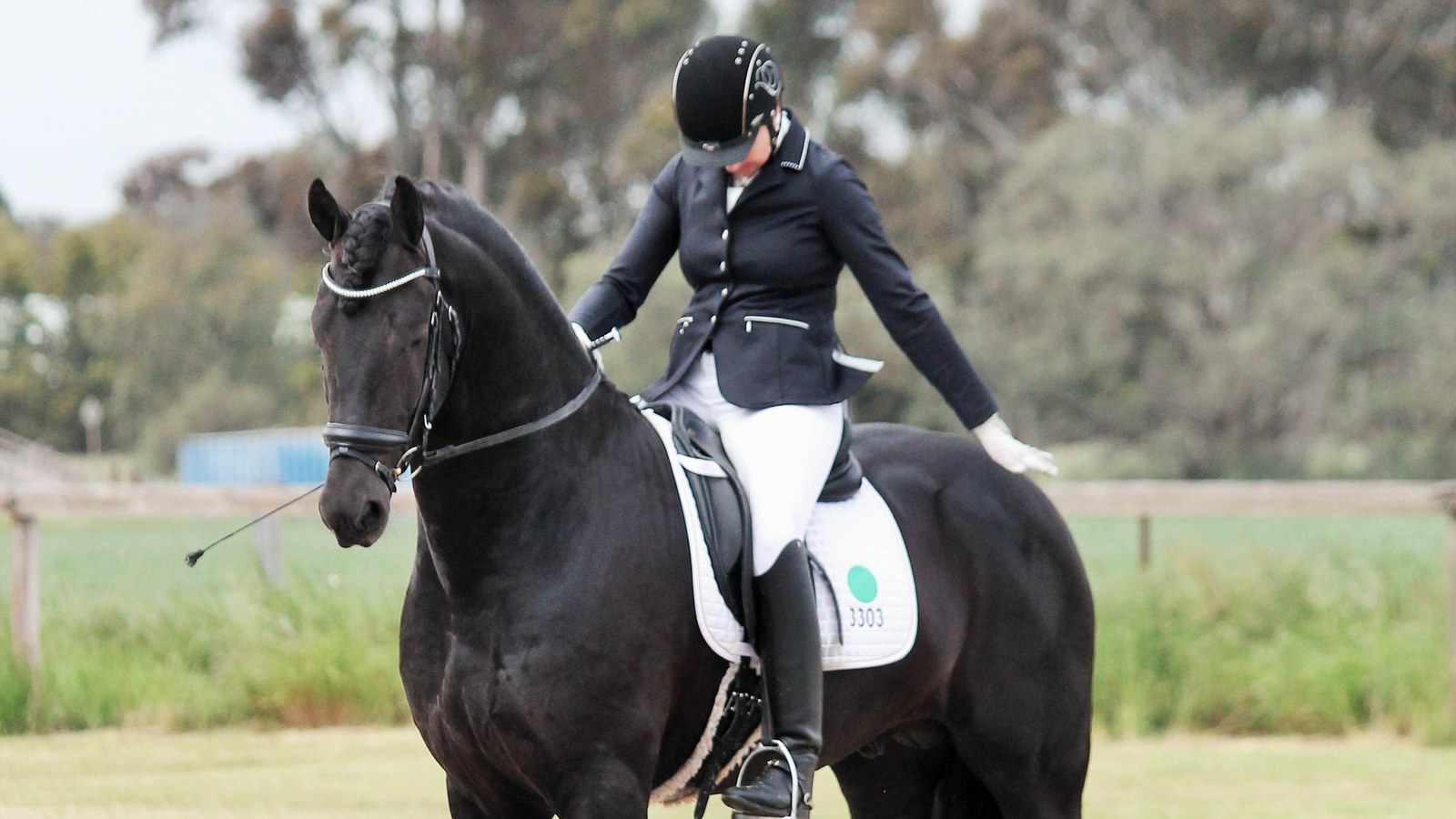
You’re 90% of the way there. I find the 10%.
You ride three or four times a week. You turn up, you try hard, you care. You are not lazy and you are not doing it “wrong”, which is exactly why being stuck is so maddening. Progress never comes from the 90%. It comes from the last 10%, and almost nobody is ever shown what theirs is.
So before you watch a single module, you send me a video of you riding. It doesn’t have to be pretty, and it doesn’t have to be a good day. In fact a bad day is more useful. I watch it, I find the one thing that’s actually blocking you, and I build you a six-week plan around it.
Your first six weeks, built around your horse, on the day I watched him
- What your horse is genuinely good at, in plain language, so you stop discounting it
- What you're already doing well that nobody has ever bothered to tell you
- The strength in your partnership that everything else is going to be built on
- The exact habit that's costing you marks. Not “more forward”, but “you're controlling his speed with the reins, which lifts your hands and sends them backwards”
- What your horse needs to become more attentive and responsive to
- What's happening in your body that you cannot see from up there and no one on the ground has ever mentioned
The single thing we're changing over six weeks, why we're changing it, and the exercises that do it: frequent transitions, changes of direction, transitions within the pace, circles, lateral work, chosen for your horse rather than for horses in general. If he's hot and forward, we don't try to stop the energy, we teach you to redirect it.
- Maintain a more consistent rhythm and tempo
- Respond to subtle changes in your seat rather than your hands
- Become less reliant on the rein for downward transitions and rebalancing
- Stay relaxed and connected through changes of direction and lateral work
- Wait for you, instead of anticipating and rushing forward
Based on a real member plan. Every one is written from your own video, for your own horse.
This is the piece that changes everything, and it’s the reason this isn’t just another video library. Once you know your one thing, the whole membership site stops being seventeen thousand videos you feel guilty about not watching. You go to the two recipes you need right now, you work your plan, and every ride has a point to it.
And after six weeks, we do it again. New video, new assessment, new focus. Because the one thing holding you back today is not the one thing that’ll be holding you back next month.

What we’re actually buildingRiders who don’t need me standing in the corner of the arena. That’s the goal. That’s always been the goal.
Nothing about your week changes except that you know what you’re doing.
- TueLesson. It goes well. You feel it.
- WedTry to recreate yesterday. Half of it comes back.
- ThuSomething's off and you can't work out what. Circle. Circle.
- SatSchool the same thing five times. No idea if it was right.
- SunWatch a video after a frustrating ride. Take notes. Forget them by Tuesday.
- TueLesson. Spend most of it catching back up to where you were.
- TueLesson. Same lesson, but now you know which piece of the wheel she's fixing.
- WedOpen your plan. Today is week three, session one. You know before you tack up.
- ThuHe leans. You know it's a connection problem, and you know the three steps.
- SatPlug in a training audio and let me talk you through the whole session.
- SunFilm thirty seconds of the bit that isn't working. Send it. Get an answer.
- TueLesson. You start ahead of where you finished last week, instead of behind.
Eight modules. One for every level, from your very first test to Grand Prix.
You don’t wade through all of it. You start at the level you’re actually riding, and you get the recipes and everything you need to master that level. The next one is already waiting when you’re ready.
 Module 1
Dressage Fundamentals
Understanding the dressage scale, the art of the contact, and essential groundwork. Where most “advanced” problems actually live.
 Module 2
Training Level / Preliminary
Developing the forward, acceptance of the bit, and smooth transitions. The foundation every score above this one is built on.
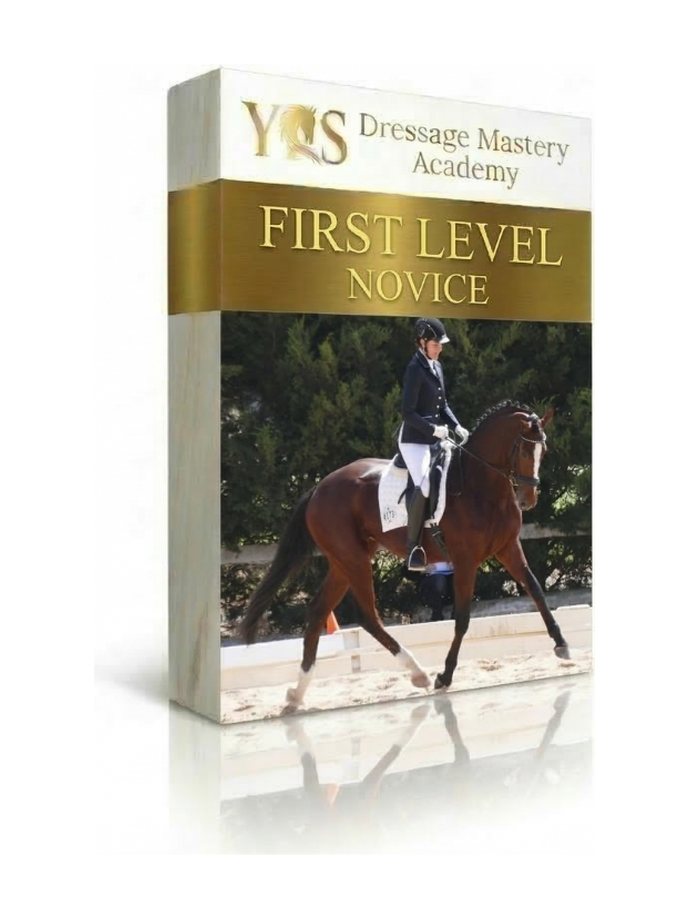 Module 3
First Level / Novice
Increasing engagement, improving balance, and riding the standardised tests so the marks finally reflect the work.
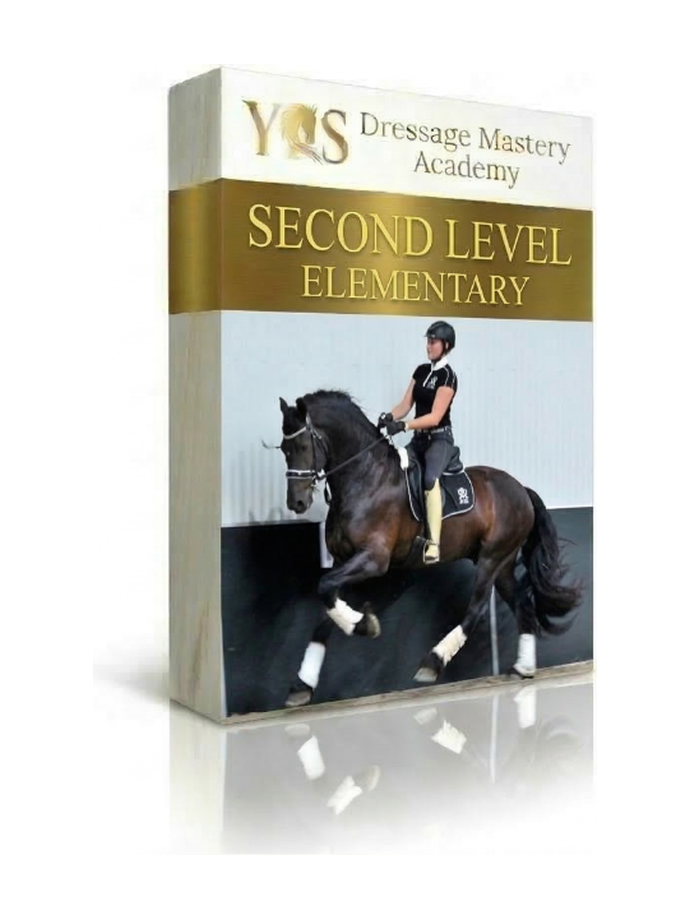 Module 4
Second Level / Elementary
Mastering lateral work, refining the aids, and holding the connection when the questions start getting harder.
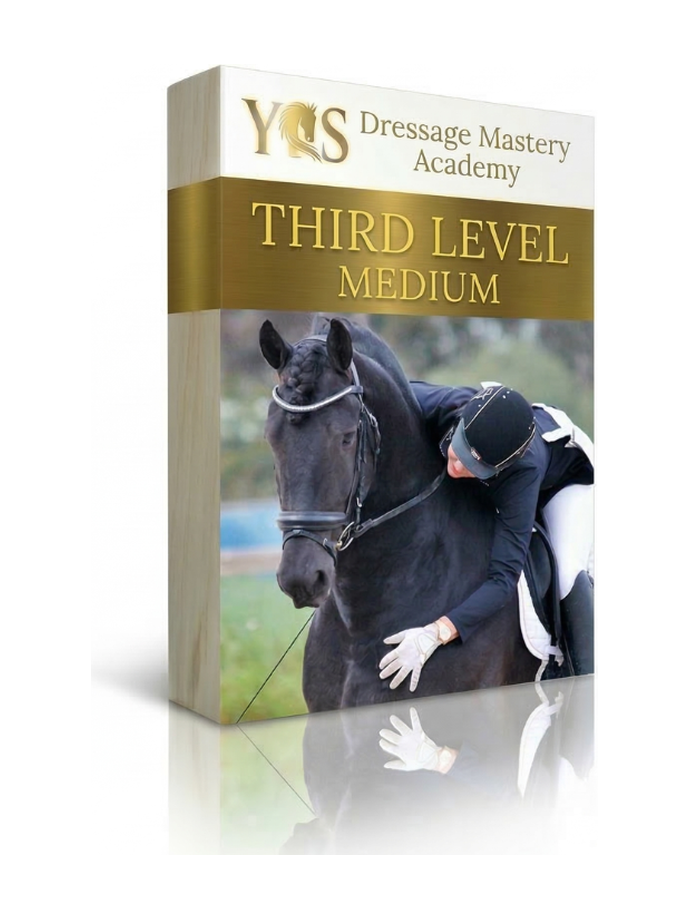 Module 5
Third Level / Medium
Medium and collected paces, travers and renvers, half pass, and building a horse strong enough to carry it.
 Module 6
Fourth Level / Advanced
Real collection and the half halt, flying changes, and counter canter that holds together under pressure.
 Module 7
PSG & Inter I
Pirouettes, the tempi changes, and the small-tour work. Including how Natasha counted hers when she couldn't feel them.
 Module 8
Inter II & Grand Prix
Piaffe, passage, ones. Yes, it's in there. No, you don't have to look at it yet.
The dream you’re not supposed to say out loudTop hat and tails. A canter pirouette. Riding down the centre line and knowing, actually knowing, before the score goes up.
You stop needing someone standing in the corner of the arena.
- You know exactly what you should be doing in every single riding session, before you tack up
- You know the recipes and the steps to follow to progress to your next level
- You can name what’s going wrong the moment it goes wrong, and you know which recipe fixes it
- You have less to think about in the saddle, not more, because the noise has an order now
- You walk into a test calm and accurate instead of wiggling down the centre line hoping
- You have riders around you who understand exactly where you are, and not one of them judges you
- Your horse gets stronger, more supple and more genuinely through, because he’s finally being trained in a sequence
- And you look forward to riding again. Which, honestly, is the whole reason any of us started.
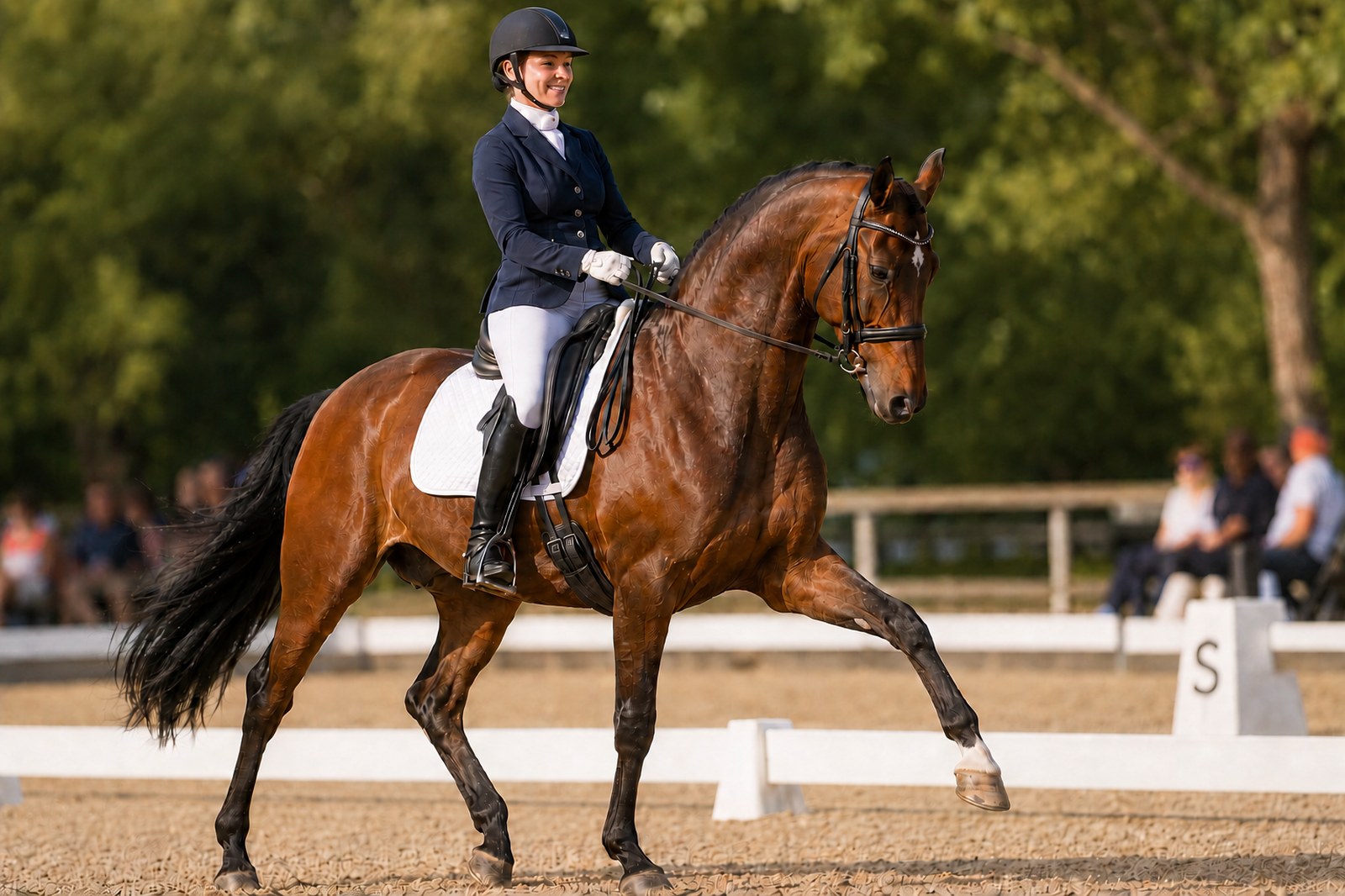
The ride you keep picturingSitting tall, completely still, the power underneath you, and every aid invisible to anyone watching.
“I’ve only done three lessons so far and they are fantastic.”
If you follow the system and the recipes, it is genuinely difficult not to make progress in your dressage.
“This program has allowed me to find the missing link for me, focus and not procrastinating. I've only done 3 lessons so far and they are fantastic. Really looking forward to progressing and having fun too.”
“Within ten minutes, I had solid, supple and even connection.”
Kristi had been fighting contact for more than ten years before she joined. Not a beginner. A decade of the same daily frustration.
“We won! Achieved a personal best of getting over 65%. Light-bulb moment from watching DMA part six, collection and half halt. Thanks for a fabulous program.”
“Dressage Mastery has given me the tools to learn even when I don't have a trainer.”
“What a great day with my incredible Knight. Testing at training level three, we scored a 68, and I couldn't be prouder.”
“My first try at second level. A few bobbles and a break, but thanks DMA, I'm finding the program extremely helpful.”
She took a first place.
Tiffany went in her first ever dressage test and came third.
Everyone's first test is terrifying. Not everyone's first test is a placing.
“It's still not good, it's still not great…” said Heather, holding her first ribbon.
Nobody has ever scored 100% in a dressage test. Not once in the history of the sport. You're allowed to be proud of a ride that wasn't perfect.
Here’s exactly what lands in your inbox tonight.

The core program
Yours the moment you join, for a full twelve months.
- The eight-module recipe bookFundamentals through to Grand Prix. Step-by-step recipes for every movement at every level.
- Your personalised six-week planNatasha watches your video, finds your one blocker, and writes your plan around it. Renewed every six weeks.
- Training in Real TimeFull coaching sessions with real riders at every level, so you can see what it looks like when it goes right, and when it doesn't.
- Learning manuals & recipe booksWritten, printable, and sitting in the tack room. Every step, in order.
- Troubleshooting guides“I followed the recipe and he pig-rooted halfway through the leg yield.” It's in there.
- Video reviews with NatashaTen to fifteen seconds of the thing that isn't working. She tells you which part of the recipe you've missed.
- Weekly live Q&A ZoomsAsk anything, live. Sometimes dressage, sometimes goal-setting, sometimes the mental side of it.
- Video, audio, transcripts and workbooksEvery session in every format, on any device, anywhere you can get online.

The manualsEvery recipe, written down, in order, so you can take it to the arena instead of trying to remember it.
Four fast-action bonuses
These are for the riders who decide. They aren’t available if you come back to the website later.
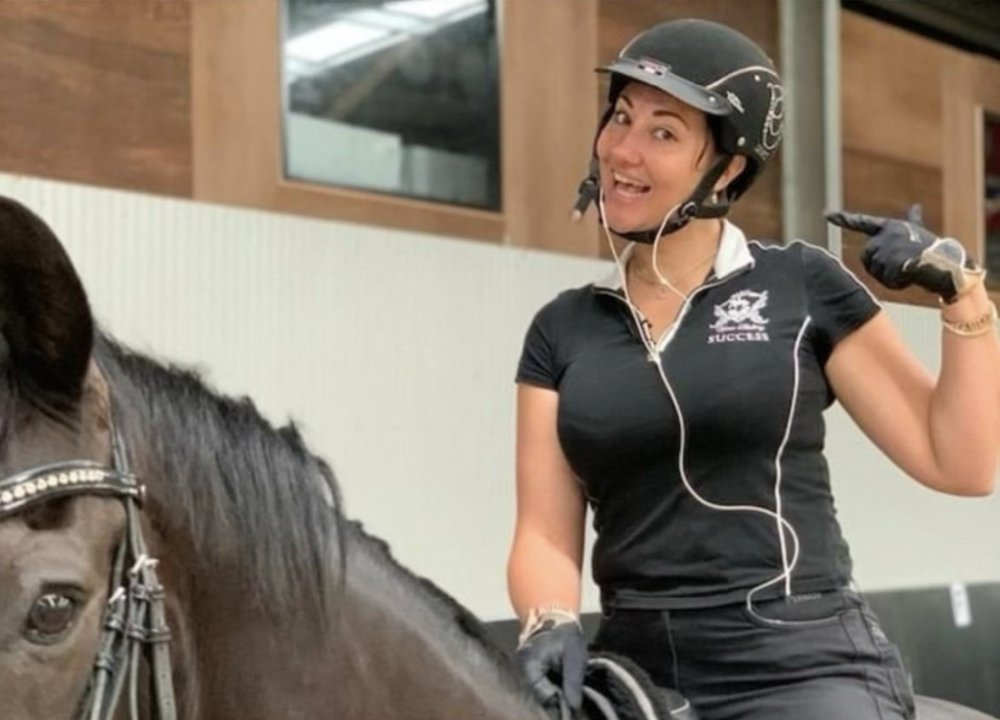
100+ training plan audios
“I have to ride but I can't be bothered thinking today.” Put Natasha in your ear and she'll give you the whole session: the plan, the exercises, and a bit of nonsense to keep you honest. Riders ask for these more than anything else in the program.
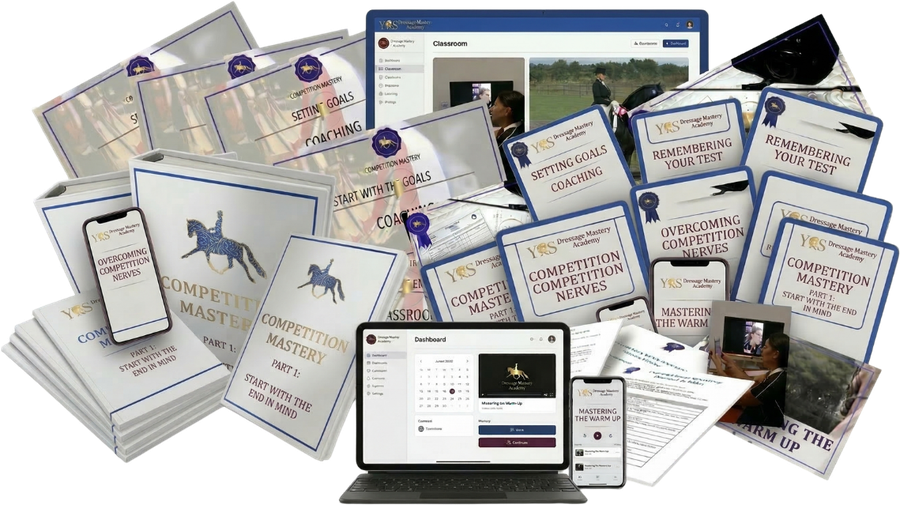
The Competition Mastery course
How to remember your test. How to plait and turn out. How to warm up, and how to survive a warm-up arena full of other horses. How to prepare a month out, a week out, a day out, and how to read the sheet afterwards and know what to do on Monday.
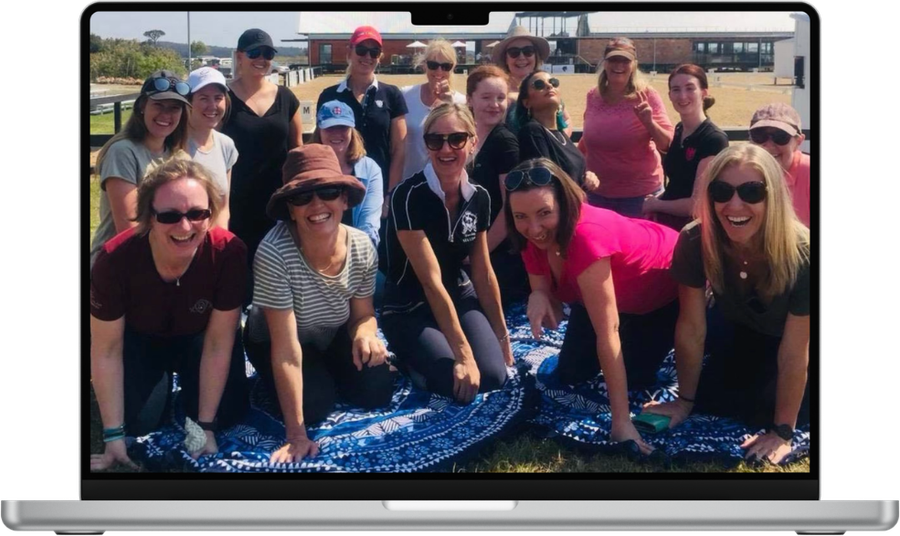
12 months in the Rider's Lounge
The community Natasha wishes she'd had. Riders posting “this is my first ever attempt at leg yield” and getting “that's amazing for a first try” back. Monthly lounge parties, prizes, and a hard rule: nobody is ever made to feel small here.
Monthly in-house competitions
Send a video of your seat, or your trot to canter transition. Send it again thirty days later. Natasha picks first through sixth, not for the best transition, but for the biggest improvement. It's the only dressage competition you'll ever enter where the beginners can win.
Significantly less than you have already spent working this out on your own
Natasha spent somewhere north of a hundred thousand dollars learning this the hard way: travelling, competing, moving her family to Europe. You’re not paying for that. You’re paying to skip it.
Payment plan
- Everything above, unlocked immediately
- All four fast-action bonuses
- Your six-week plan starts as soon as you send your video
- 180-day money-back guarantee
Pay in full
- Everything above, unlocked immediately
- All four fast-action bonuses
- Your six-week plan starts as soon as you send your video
- 180-day money-back guarantee
All prices in USD. Secure checkout. You’ll get your access codes within about 5 to 10 minutes of joining.

Take 180 days. Use all of it.
Join today, work through the program, do the workbooks, come to the Q&As, send your video, ride your plan. And if at any point in the next 180 days you can honestly say this hasn't helped you understand your dressage better or make progress, email the team and we'll refund you in full. All of it.
Your farrier doesn't do that. Your vet doesn't do that. Your riding coach has never once said “I'll teach you for a year, and if you don't progress I'll give you your money back.”
I do. Because honestly, I don't want your money if I can't help you.
And one thing I want to be clear about, because it matters: there is no clock on your level. I am not going to tell you that you have to graduate within twelve months. Some riders move up in a season. Some have been at prelim for six years and need a while to trust that things are actually changing. Both of those are completely fine. Training is not a straight line, and things often feel slightly worse before they feel noticeably better. You will progress, and you will enjoy it, and nobody here is going to stand over you with a stopwatch.
This is not for everybody.
Dressage Mastery Academy is for you if…
- You've tried and tried, and you don't know how to break through to the next level
- You don't currently have an effective recipe for training your horse
- You've been stuck long enough that it's stopped feeling like a phase
- You're desperate to enjoy your riding again
- You want to know how to make real, visible progress rather than just work harder
- You want a genuine partnership with your horse, not a fight
- You're willing to follow a system rather than collect more tips
It's honestly not for you if…
- You want to sit back and not actually do anything
- You're looking for a magic pill. Natasha looked for years, there isn't one
- You aren't willing to invest in yourself and your riding
- You never implement what you learn
- You'd rather keep looking for the answer in a new horse, a new bit or a new coach
- You already know it all
The questions riders always ask.
I've been stuck for years and I've tried other things. Why would this be any different?
Because everything you've tried so far has been more information: another clinic, another video, another opinion. You are not short of information. What you've never had is a sequence. This step, then this step, then this step, in an order you can follow at seven in the morning with nobody watching.
That's the whole difference. And if it turns out I'm wrong about you, you've got 180 days to tell me so and get your money back.
You ride Grand Prix. How could you possibly know how to teach someone stuck at prelim?
Fortunately, or unfortunately, because I remember all of it. I'm not one of those riders who says “I can't remember what it was like to not be able to rise trot.” I remember the group lesson where all my friends graduated and I didn't. I remember pony club, still fighting to get my horse on the bit. I remember the competition where my horse bolted and my coach told me I'd embarrassed her.
I've cried enough litres for all of us. That's exactly why I can teach your level.
Is this only for dressage riders?
No. If you're an eventer, or you jump, or you just want a horse that goes better, this is the foundation underneath all of it. Dressage is simply the systematic training of a riding horse. Flatwork done properly. Everything you learn here makes every other discipline easier.
Which level do I start at? What if I'm not sure?
You start at the module for the level you're actually riding: fundamentals, training level, first, second, third, fourth, PSG, wherever you are. If you're not sure, your six-week plan will tell you, because it's written after I've watched you ride.
All eight modules are open to you from day one, but you won't need them all at once. That's rather the point.
Do I actually have to send a video of myself riding? I'd be mortified.
Yes, and I promise you it's fine. It doesn't need to be a good ride, it doesn't need good light, and it definitely doesn't need to be a good day. Ten to fifteen seconds of the thing that isn't working is more useful to me than five minutes of your best.
I have never once had a reaction to what a rider sends me, and I never will. Are you one of those people who cleans the house before the cleaner comes? Same instinct. Send the messy one.
Do I need to compete for this to be worth it?
Not at all. A dressage test is simply a way of finding out how responsive your horse is under a bit of pressure, and you can ride one at home in your own arena with nobody watching. Plenty of members never enter a competition and get everything they came for.
That said, we do run tests inside the program every eight weeks, so you can see where you're at without white breeches, a float, or plaiting anything.
How much time does this actually take?
It doesn't add time to your week. It changes what you do with the rides you're already doing. Most riders spend twenty minutes or so with a module or a manual before they ride, then ride their plan.
Natasha got to Grand Prix on three rides a week. If three rides a week is what you've got, three rides a week is enough.
What if my horse isn't talented enough?
I took a Friesian to Grand Prix. Nobody does that. I bought him because he could bow, and I was told he'd fall over if I tried to canter him at five. Before him I took a Friesian cross Thoroughbred to Inter II.
Your horse's potential hasn't been proven to be limited. It just hasn't been tested with the right progressions yet. Those are very different things.
Can this really work online, without someone physically there with me?
Here's the honest answer: your coach isn't there either. Not on Wednesday, not on Saturday, and not in the test. That's exactly the problem we're solving.
What you get instead is a plan for every ride, recipes you can follow alone, video reviews when something won't come right, live Q&As every week, and a whole community of riders in the same place as you. That's more support between lessons than almost anyone in this sport has.
I'm outside Australia. Does that matter?
Not in the slightest. Members ride in the UK, the USA, Canada, Europe, New Zealand and beyond. Everything is online and available in video, audio and written form, so you can use it in whatever time zone and whatever weather you've got. The recipes don't change with the postcode.
I've already spent so much money on this sport. I can't justify more.
I understand that better than most. Horses are relentlessly expensive, which is exactly why this costs a fraction of what it took me to learn it. Set against a year of agistment, feed, farrier, vet and entries, it is a small line on a page you are already paying.
And here's the uncomfortable version. You are already spending the money. Agistment, feed, farrier, vet, entries. That goes out whether or not you're progressing. The expensive thing isn't joining. The expensive thing is another year of the same sheet.
How does the guarantee actually work?
You have 180 days. Use the program, do the workbooks, come to the Q&As. If you can honestly say it hasn't helped you understand your dressage better or make progress, you email the team and we refund you 100%. No forms designed to wear you down, no arguing.
What happens the moment I join?
You'll go to a secure checkout page. Within about five to ten minutes the automation runs and your access codes land in your inbox, along with instructions for sending your riding video so I can start on your six-week plan.
You can be inside the first module tonight.
Imagine you’d been given the recipe four years ago.
What level would you be riding at now? Not because you’d have worked harder, you couldn’t have worked harder. Just because every one of those hundreds of solo rides would have had a point to it.
You can’t have those four years back. But you can make sure the next four aren’t the same, and you can find out in one afternoon whether I’m right about you.
Your past does not equal your future. You have not been failing. You’ve been cooking without a recipe.
From $98 today · 12 easy payments · or $997 in full and save $179
Big love, Tash
© Your Riding Success. Dressage Mastery Academy is an online training program. Results depend on the work you put in, your horse, and your circumstances. Nothing here is a promise of a particular score, placing or level by a particular date. All prices in USD.