Here's what horse trainers and coaches have never told you…
either because they don't know it themselves, or because they'd rather you didn't.
Maybe there was a fall. Maybe nothing dramatic happened at all. Either way, you know what it looks like now... checking the wind before you drive over, and just grooming your horse or walking in hand instead of riding.
This isn't a courage problem or a character problem. Sometimes there genuinely is something about the horse or the situation that needs looking at. But even when you've looked at it, the feeling comes with you into the next ride.
You didn't stop loving horses. You stopped enjoying how riding feels. And that is the part most riding advice has never shown you how to change.
- The one thing no riding coach was ever trained to teach you
- Not pep talks, not pushing through, not a quieter horse. Something else entirely
- Already used by 4,010 riders to get back to riding they actually enjoy

You’ve sat in the car at the stables
and not gotten out.
And you found a reason. The weather wasn’t right. The arena was too busy. He seemed a bit fresh. And then that quiet little wave of relief when the lesson got cancelled.
Or maybe you always get out. You always get on, you always get through it, and you just don’t enjoy it the way you used to. you always get out, you always get on, you always get through it, and you just don’t enjoy it the way you used to.

Nobody sees this bitTen minutes in the car park, working out whether today is the day.
The ladder down
The canter became a trot. The trot became a walk. The walk became "I'll ride tomorrow." Nobody watching would call it fear. You know exactly what it is.
The shrinking world
You only ride in the arena now. Only when someone's home. Never out on the trail alone. The circle you're comfortable in has quietly got smaller every season.
The part you can't say
You can't tell your horsey friends. There's shame underneath it, and a feeling of being a failure at the one thing that used to be your happy place.
- Your hands shake at the mounting block and you hope nobody notices.
- You’ve stopped booking the clinic, the trail day, the show you used to love.
- You lie awake the night before a ride wondering why you’re like this.
- Somewhere in the back of your mind is a sentence you refuse to say out loud: “maybe I should just sell my horse.”
If that’s you, take a breath. You’re in exactly the right place, and there is nothing wrong with you.

You are not the only one4,010 riders have sat exactly where you’re sitting, and got out the other side.
Right. Here it is
Let’s start with what
the secret isn’t.
You’ve almost certainly been told most of this list. Some of it more than once, and some of it by people you trusted. Every item on it is sensible, well-meant advice given to you by people who wanted to help, and some of it is worth doing anyway.
But none of them, on their own, necessarily touches the thing that is holding your fear in place.
The secret to ENJOYING RIDING AGAIN IS NOT…
- A pep talk, or one more person telling you that you’re fine
- Getting back on and pushing through it
- More groundwork, or a better bond with your horse
- A quieter horse. You’ve possibly already bought one
- More lessons, or finally finding the right coach
- Being braver, or wanting it badly enough
- Time. However long it’s been, you already know how that one goes.
- Waiting until you feel ready
- Getting fitter, or stronger, or lighter
- Just riding more
Fear isn't something you are.
It runs as a learned program.
Not a character trait, and not a personality. A sequence your mind learned, that now runs by itself, the way your heartbeat runs by itself. You never chose it and you never agreed to it. It just started running.
A problem you could solve by working it out would have gone the day you worked it out. You can't argue this one into stopping, any more than you could talk your heart into beating slower. Which is exactly why the sensible advice bounces straight off it.
But a learned program can be rewritten. There is a whole method for doing exactly that, and it has been around for decades. It just never made it into the arena.
It’s called NLP. Which is a terrible name
for a very practical idea.
Neuro-linguistic programming. Ignore the name. Here’s what it does for a rider.
Nobody sat you down at school for How To Choose What I Feel, or What To Do When I’m Frightened. You were handed a brain and left to work it out.
NLP is the missing manual. It shows you which program is playing, and how to change the channel. Natasha’s own description… “I’m the TV guide for your brain.”
Not positive thinking. Not pretending your horse will never spook. And not talking yourself out of being frightened while your whole body is telling you otherwise.

The missing manualNatasha has spent a decade translating this into the arena.
Your coach was handed a manual for the horse. Nobody ever handed them one for the rider.
They trained for years in how a horse learns, moves and thinks. That training contained almost nothing about what happens inside the person sitting on top.
So they teach you what they were taught - leg here, hand there, sit up, breathe out, and when the fear doesn't shift, they hit the edge of what they know.
That's the moment you get "just get over it", or "maybe this horse isn't right for you." It isn't unkindness. It's a gap in their education, and you've been paying for it.It happens where nobody can see it.
A coach can see your hands tighten and your shoulders come up. What they cannot see is the half second before that, which is where the whole thing actually happened.
And you don't tell them. You say he was fresh, or the ground was slippery, or you didn't have much time. So what they see is a rider who has gone a bit careful, and they fix the riding, because that is what a careful rider looks like from the ground.
Nobody has solved this for you because, as far as anyone around you knows, there has never been anything to solve. You have been very good at this. It is the one thing you have got better at since the fear started.
One catch: you can’t just go and find any NLP practitioner.
You could. There are thousands of them, and some riders do just find any person who is trained in NLP.
They’re good at what they do: smoking, spiders, public speaking, confidence in general. But you don’t need NLP in general. You need it translated into the saddle.
Someone who has never ridden can’t tell the difference between a learned fear response and a horse that genuinely isn’t safe. They don’t know what happens in the half-second when your horse drops his head, gets fresh, or takes one quicker step.
And there is a second half they can’t coach… your seat.
A frightened rider tips forward, grips and braces. That makes her less secure, telling the horse to go faster. So the fear changes the body. The horse responds to the body. And the horse’s response appears to prove the fear was right.
Change the pattern in a consulting room and you can still arrive at the mounting block with the same position, and no plan for the second your horse reacts.
Which is why this has to work on both ends of the reins: the pattern running inside the rider, and the rider’s body on the horse.
Natasha didn’t learn this in order to teach it. A stallion put her through an arena fence and fractured a bone in her back, and three months later she stood at his shoulder and found that knowing how to ride was not enough to make her put her foot in the stirrup.
She went looking for the answer because she needed one herself. Then she spent over a decade combining it with Grand Prix riding knowledge and refining it around the moments frightened riders actually face.
You were never broken. You were never told.

The one person who is genuinely bothA Grand Prix rider who also happens to hold the manual for your brain.
What actually did this
For some riders, it was one fall.
For a lot of others, there was never a fall at all.
And usually not even a dramatic one. You came off, you got up, you dusted yourself down. You might have got straight back on that same afternoon and told everyone at the barn you were absolutely fine.
You probably were, that day. It was the weeks afterwards that changed.
And if there was no fall, don’t count yourself out. Confidence can disappear without one clear moment. The trigger may be different. What happens underneath is remarkably similar.

One ride out of a thousandIt takes a second and a half. The weeks afterwards are the part nobody warns you about.
nothing happened
something did
And you know the sum doesn’t work. You’ve done it yourself, probably out loud, probably more than once. Thousands of rides. One bad one. This is ridiculous.
You’re right. It is not logical. And knowing that has never once made it better. If logic could fix this, you’d have fixed it the same week it started because you are not a stupid woman, and you worked it out immediately.
That’s the bit everyone gets wrong about you. They think you haven’t realised. You realised on day one. You’ve just discovered that realising it does absolutely nothing, and then quietly concluded that the problem must be you.
And if there was no fall, if it was a rear you managed to sit, a bolt that ended fine, a buck out of nowhere, watching a friend go down, coming back after kids or surgery or a decade away, a greener horse, or a fear that turned up with no invitation at all… the mechanics underneath are identical. The trigger is different. What your brain does with it is not.
There is a reason the thousand didn’t count.
Stay with us, it’s further down this page.
Before we go any further
There are two kinds of riding fear.
We only work on one of them.
This matters because the same solution should never be used for both. FearLESS Mastery will never use mindset work to persuade you that an unsafe situation is safe, and knowing which kind of fear you have changes what you should do next.
Your fear is doing its job.
This horse has hurt people. Or he's hurt you, more than once. Or you genuinely don't yet have the skills to sit what he does.
That's the same as being asked to get in a car with no seatbelt, doing 300km/h, with a drunk driver. You should be frightened. You'd be mad not to be.
"I know he doesn't do anything."
How many times have you said that sentence? He's quiet. He's given you no real reason. On paper, nothing is wrong. And you're still frightened.
That's the seatbelt on, doing the limit, sober - and still not able to turn the key. The risk is the ordinary risk everyone accepts because the joy is worth it. But your body has stopped accepting it.
If you’re not sure which one you’ve got, that’s usually a sign you’re in the second camp. Riders with a genuinely dangerous horse rarely wonder. Get his back and saddle checked anyway. Alongside this work, not instead of it.
And let’s be honest about what horses do.
Nobody here is going to tell you to get on a dangerous horse and be brave about it. That isn’t confidence, it’s recklessness, and Natasha has no time for it.
The quiet, suitable horse, the quietest one in the yard, the schoolmaster, the one your instructor puts beginners on will still shy at a bag in the hedge. Will still spook at a shadow on a windy day. Will still put in a pig root on a cold morning when he’s feeling well.
That isn’t a dangerous horse. That’s a horse.
So the question was never “will your horse ever do anything?”, at some point, they will. The real question is what happens in you when your horse does.
Which is exactly why this program has a third phase,
and why it happens in the saddle, not in your head.
Phase Three is the riding half of the answer: the seat, the position, and the physical skills. This means that when the horse shies, spooks, or pigroots, you can sit it, not braced or clinging, but balanced, secure, and still able to ride your horse forward out of it.

A horse being a horseFresh, forward and full of himself, and entirely sittable, once you know how.
What it’s actually costing you
The bills stay the same. The riding doesn’t.
One of our members sat down and added up a single year of owning her horse. She’d never done the sum before. This is what came out.
She didn’t include the $9,000 she paid for him. And then she said the part that stayed with us.
“For two of those years… I was too scared to really ride him.”
Mel, FearLESS Mastery member
A real member’s numbers, in AUD. Yours will look different – but you already know it’s not small.
$14,556 a year is just under $40 a day. She was paying that whether she got on or not. a year is just under $40 a day. She was paying that whether she got on or not.
The financial cost is the one you can put on a spreadsheet. The emotional one is worse: the confidence built over a thousand good rides, quietly eroded. The grief of losing the part of yourself that used to ride.
The advice you were given
You did everything they told you.
None of it was ever going to work.
Not because you didn’t try hard enough. You tried harder than most people would. But, every one of these treats riding fear as a courage problem, and it has never once been a courage problem.

The advice you were givenEvery one of them meant well. None of them had been taught this.
Fear is not overcome by logic, because fear was never logical. You can prove to a rider a thousand times that the horse is safe and it will not touch the fear by a single degree.
Some riders sell a horse they love, buy the quiet one and are still frightened six months later. Nothing was wrong with the first horse, and nothing is wrong with the second. The missing piece was never in the paddock.
This is the most expensive advice of the lot. Every "I forced myself and survived" ride gets logged by your brain as fresh evidence that riding is dangerous and you only just made it. The fear gets bigger, not smaller.
All useful. None of them reach the part of your brain holding the fear in place. That work happens on the inside and almost nobody in this industry is trained to do it.
Half true, and it isn't a flaw. You do weigh consequences differently at fifty than you did at twenty. But that's judgement, and judgement is useful. What's actually happening fires before judgement gets a look in.
Said kindly, and it isn't even wrong. But look what it does. Now you're frightened, and you're also the reason he might be. So you have something new to be frightened about. It's the only advice here that adds a layer instead of removing one.
And when they didn’t work, you decided you were the thing that was broken.
That’s the part Natasha wants to take off you first. When a rider tries something to fix her fear and it fails, she almost never concludes that method doesn’t work. She concludes I don’t work. Something must be wrong with me.
There isn’t. You just haven’t had it explained in a way that lets you break through it yourself. Failing before has nothing to do with how strong, how brave, how smart or how talented you are and it says nothing at all about whether you’ll fail again.
Here’s the hard part, and Natasha says it because she lived it:
this fear came on its own but it does not leave on its own.
The thing nobody has told you
Your brain has rehearsed a thousand falls
you never actually had.
Close your eyes and picture cutting a lemon into quarters. Lift one to your mouth. Bite down. Feel the juice.
Nothing touched your tongue. You knew the lemon wasn’t real. Your mouth watered anyway.
That is the important part. Your brain knows perfectly well you are imagining it. Your body reacts as though it matters right now.
So every time you have rehearsed the ride going wrong, lying awake the night before, sitting in the car park, standing at the mounting block, your mind and body have practised the same sequence. The spook, the bolt, the fall. Losing control, not knowing what to do.
Maybe one of those things happened once. Maybe none of them ever happened at all. Either way the rehearsal was real enough to produce the tension, the gripping, the racing heart, and the quiet decision not to ride today.
Which is where the sum finally makes sense. It was never a thousand rides against one bad one. The ordinary rides were real, but nothing happened on them, and nothing is not information. The frightening one was vivid, and you replayed it, so that is the one your mind prepared for.
This is how confidence can disappear even when your horse, your ability and the actual level of risk have barely changed.
You haven’t been failing to get your old confidence back.
You’ve been quietly rehearsing the pattern that replaced it.

Filed as evidenceYour brain cannot tell a fall from a rehearsal of one.
That’s not a character flaw and it isn’t weakness. It’s a brain doing precisely what brains are built to do. The very fact that it learned this pattern so well is the proof that it can learn a different one.
The half-second where fear begins
Your horse did something. Your brain decided what it meant.
Your horse shakes its head and gets faster. Before you have had time to work out why or what comes next, the story is already finished.
That's the whole of it. It might matter. There could be a real reason behind it, and that's worth finding out, but that is all you actually had.
- He's going to bolt.
- I've lost control.
- This is how people die.
Once that's the thought, the emotion is fear. Once the emotion is fear, the action follows on its own: you pull, freeze, brace, and get off. Not one step of that was a decision you made.
Your old confidence rested on nothing going wrong. The confidence you need now is being able to read what is actually happening, and trusting yourself to answer it.
Everyone tries to fix the last domino.
This is the NLP communication model: the map of your own brain that nobody handed you at school. It runs in every rider, every ride, in this exact order.
bits of information hit you every second you're in the saddle.
is all your conscious mind can hold. The rest is deleted. Instantly.
Beliefs, values, self-concept. They choose which seven survive.
Those seven become your version of what just happened.
And then, and only then, comes the thought, the feeling, and finally what you do about it.
Which is the one bit everyone tries to fix. "Just ride the horse." "Get back on." "Push through."
You do ten good trot-walk transitions and one that doesn’t land, and your brain keeps the one. It deleted the nine pieces of evidence that your horse is listening to you, because your filters decided they weren’t the important ones. Now scale that up to a thousand rides and one fall and you have the whole of it.
Two riders, same horse, same moment. One’s brain builds a Spielberg film of a head-shake and a gallop. The other’s records a horse going a fraction faster. Neither is reality. Reality got deleted four steps ago.
You can’t out-brave a filter.
You change the filter. Then the film changes on its own.

Your fear isn’t a feeling.
It’s a sequence and sequences can be rewritten.
Once you know the filter is doing the work, you can go and find the exact sequence it’s running. Every frightened rider has one: fixed, step-by-step, the same order every time. It produces fear reliably because it’s a program, not a mood.
- Foot goes in the stirrup.
- Brain plays the fall: being dragged, foot caught, head hitting the ground.
- Brain plays the horse stopping, and her not getting up.
- Brain plays the police at her front door, telling her kids.
Spielberg-grade footage, in high definition, in under two seconds - before her leg is even over. Of course her hands shook. Anyone's would.
- Foot goes in the stirrup.
- Brain plays cantering across a field. Everything easy, everything safe.
- Brain plays coming home and bursting in the door: "I just had the best ride."
- Brain plays her kids' faces. "How was your day?"
Same trigger. Different program. Rehearsed at the unconscious level until it's the one that runs by default - which is exactly what the modules do, in order, with you.
This is why riders who’ve “tried everything” get results here. Everything else was aimed at the symptom, the shaking, the avoiding, the talking yourself round. FearLESS Mastery goes after the sequence underneath it.

I know what it feels like
to be terrified of the thing you love.
I was riding my black Friesian stallion, Jorrit, around the arena thinking I am so lucky. He's the best stallion in the world. Everything is going great.
And then it wasn't. He put his head down and started bronking. I'd never sat on a horse that could bronc like that. He galloped the full 60 metres down the long side, bronking the whole way, and all I could think was: are we jumping it? Is he stopping? Which way is he going to turn?
I guessed wrong. He went one way, I went the other, straight through the fence, cleanly between two pillars, and landed on the far side of the arena.

I couldn't stand up. So I crawled back to the house on all fours. Rang my boyfriend, now my husband, and got no answer. Rang his mum instead. My groom drove me to hospital with me on all fours in the back seat and the seatbelt laid over the top of me.
The hospital scanned me and said it was just bruising. Cleared me to ride. Gave me very good painkillers. So I went and rode a dressage test - sitting trot, every stride landing like a hammer, but I was on the painkillers so I got through it.
A week later the hospital rang back. "We're so sorry. You did fracture a bone in your back. We missed it. Please don't do anything to destabilise it."


Three months out of the saddle. And the whole time, my fear festering.
When I was finally cleared, I got back on my other stallion and it was fine - he'd never have done anything. Then it was time to get on the one that bronced for no reason and broke my back. I will never forget the feeling in my stomach as I went to put my foot in the stirrup.
I didn't get on. I took my foot back out and I thought: I'm going to have to solve this.
That's when I found NLP. I learned how my brain actually worked, what happens in your body when the fear response fires, and once you know how a thing works, you can make it work differently. I did it on myself. It worked.
I rode Jorrit for another three years. He tried it on again. He got me off again, more than once - I once had to walk into a dressage ring with green grass stains all down my white breeches. But I was never scared again. That's the whole point.
And here's the bit I need you to hear, because riders assume I'm just braver than they are. I'm scared of everything. I don't watch scary films. I won't go on rollercoasters. I've simply never bothered to fix those, because my life isn't better for riding a rollercoaster. My life is much better for riding horses. So that one, I fixed.
I'm not smarter than you and I'm not braver than you. I just know some things. That's all this is.
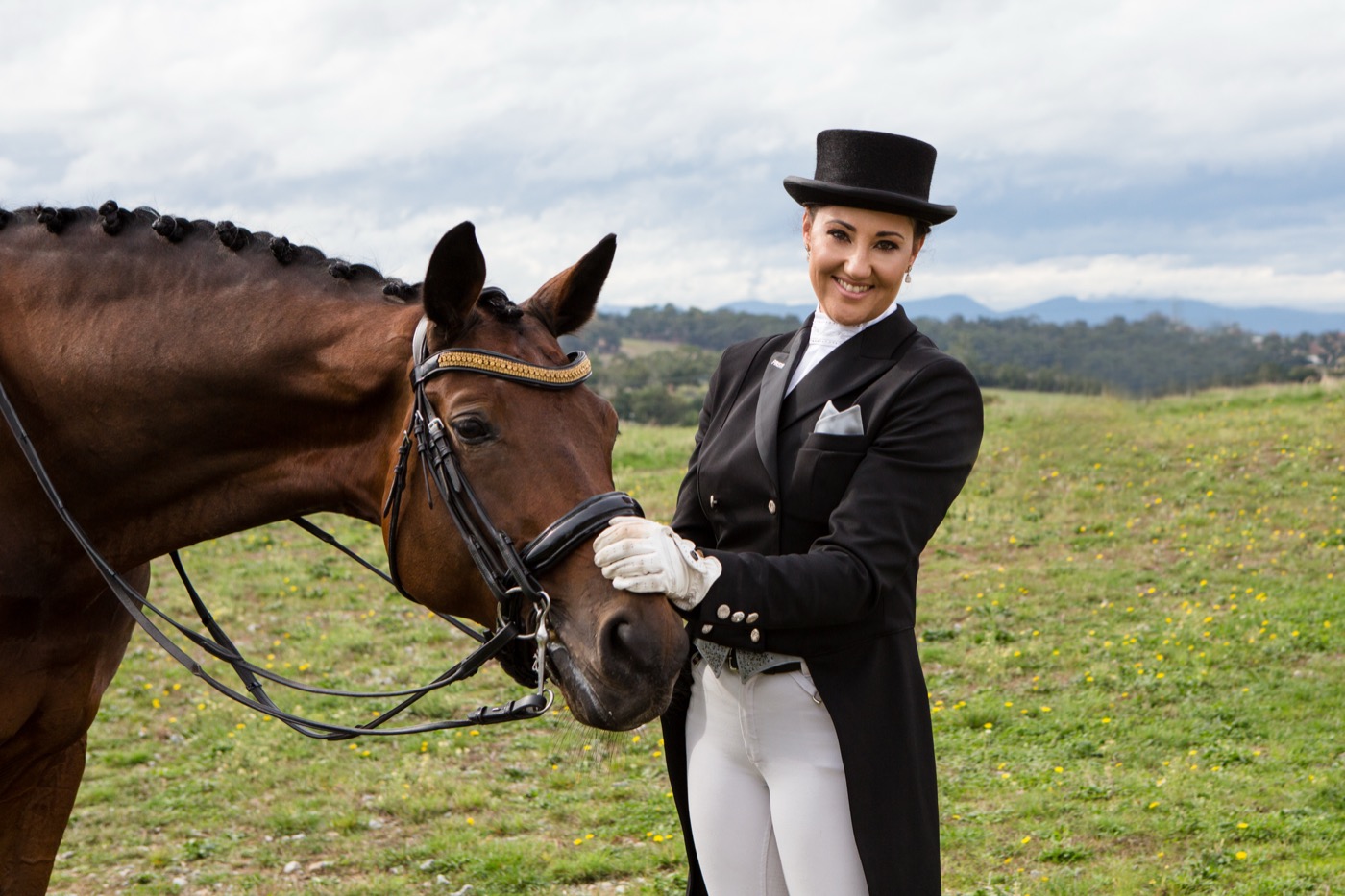
2012The fall that started all of this, in her own words.
What confidence actually is
You don’t need your old confidence back.
You need the one that comes next.
Confidence isn’t a feeling you wait for. You get in a car and drive at a hundred kilometres an hour, with other people doing the same a metre away, and you don’t think about it once. Not because nothing could go wrong. Because you trust yourself to handle something you have done ten thousand times.
Riding used to feel like that. You got on and assumed it would probably be fine.
That was your first confidence. It was real, and it wasn’t foolish. But most of it rested on one quiet belief: nothing is going to happen.
Then something changed, and you can’t unknow what you know now. Which is why every attempt to rebuild the old version asks you to believe something you no longer believe, and why reassurance, a quieter horse and one more uneventful ride never quite settle it.
There is another kind.
It doesn’t ask you to pretend horses are predictable, and it won’t make you reckless. You will still feel a flicker of nerves. They just stop getting the final say.
How FearLESS Mastery BUILDS SECOND CONFIDENCE
Four phases. Twelve weeks.
About two hours a week.
There are things underneath most of it: the programming running in her unconscious, and the fact that she doesn’t feel physically solid up there. Almost nothing in this industry works on both. This one works on both, in order.
Don’t picture modules and lessons. Picture what changes for you at each step because that’s what you’re actually buying. Not a course. A different life with your horse.

The other side of the workThe ride you come back from grinning, instead of relieved.
Make sense of it
We start by showing you exactly what's happening in your body and in your brain, so the fear stops feeling random and out of your control. The moment you truly understand it, it loses a huge amount of its grip.
- Find out which of the four parts of fear is driving yours
- Understand why it showed up when it did - even if there was no single incident
- Stop lying awake the night before a ride wondering what's wrong with you
- Stop blaming yourself, and stop blaming the horse - both are dead ends

Clear it at the root
Now we go in and actually clear it, using the same unconscious reprogramming Natasha used on herself after Jorrit. This is the part where the knot in your stomach as you put your foot in the stirrup starts to dissolve.
- Map the exact fear strategy your brain is running, step by step
- Replace it with a new sequence and rehearse it until it runs automatically
- Get to the real root - for many riders it isn't the fall they think it is
- Retire the "what if" that has been narrating every ride

Lock in the seat
This phase is actual riding. Because your horse is going to shy, spook or throw in a pig root at some point - every horse does, and no amount of mindset work is a substitute for being able to sit it.
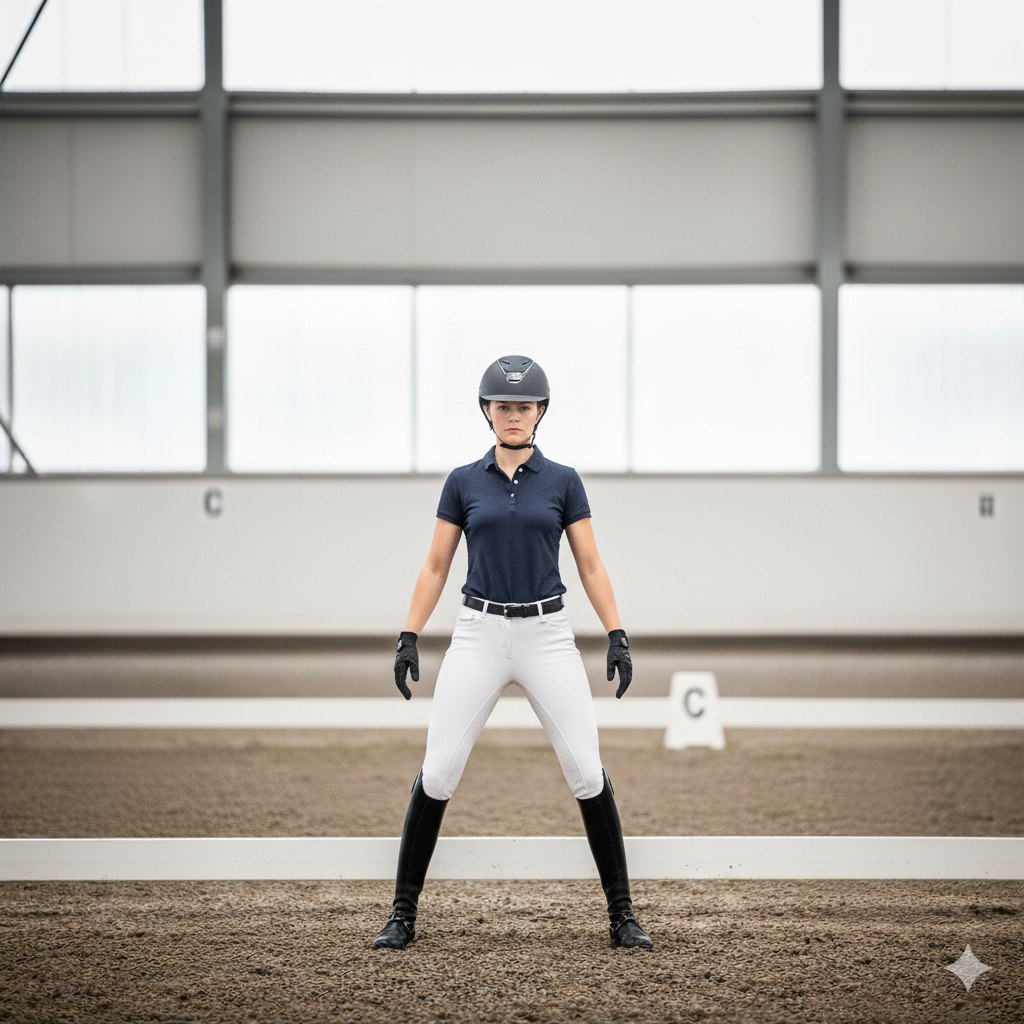
Here's something you can test on the chair you're sitting in. Put your hands under your seat bones and find the two bony bits. Now get frightened - and lean forward. Feel where they went?
Every scared rider turns into a jockey. And jockeys lean forward for a reason: it makes horses go faster. So without meaning to, you've been asking for exactly what you're afraid of. Natasha calls the fix "putting my seatbelt on."
- Get 70-90% of your weight down through your ankles, as if you were standing on the ground
- Seat bones plugged in, shoulders back - so if the horse vanished, you'd land on your feet
- Sit a shy, a spook or a pig root without losing your balance or your reins
- Stay in a position to actually ride him forward out of it, instead of just surviving it
- Use the psychology-physiology loop: where a more secure position sends your brain a calmer message
- Stop leaking "go faster" at your horse every time you tense - and give him a leader instead
And it works in both directions. The seat makes your brain calmer and the brain work from Phases One and Two makes you a physically better, quieter, more effective rider. Most riders finish this phase riding better than they did before the fear ever showed up.
This is also why affirmations on their own never worked for you. Saying “I’m a confident rider” while your body is curled into the shape of fear only teaches your brain that the words and the body do not match.

Make confidence normal
Finally we make it the new default, so riding feels the way it used to or the way you always wished it would. Hacking down the trail. Cantering across the field. Riding out with friends. Without paying a fear tax on every ride.
- Own the tools to handle fear yourself, any time it tries to come back
- Take on the things you've been quietly avoiding - the trail, the clinic, the show
- Finish a ride feeling alive instead of relieved
- Become the rider who knows that when something happens, she can handle it

Four modules. Sixteen parts.
Nothing left vague.
This isn’t a folder of videos you have to make sense of on your own. It’s a sequence, in order, each part building on the one before it, because that’s how the brain actually learns a new pattern.
Module 1: Overcoming Riding Fear
Phase One · Parts 1 to 4- Why Do I Have Fear
- Root Cause of Your Fear
- The Cost of Fear
- Overcoming Fear
Module 2: NLP Techniques
Phase Two · Parts 5 to 8- NLP Communication Model: how two million bits become the one thing you noticed
- Anchoring: getting a calm state back on demand
- Submodalities: turning down the pictures your brain plays before you ride
- Strategies: finding the exact sequence your fear runs, and swapping it
Module 3: Body Control
Phase Three · Parts 9 to 12- Lower Body Control
- Upper Body Control
- Speed Control of the Horse
- Body Control of the Horse
Module 4: The Confidence Installation
Phase Four · Parts 13 to 16- Beliefs: what you quietly decided about yourself as a rider
- Be, Do, Have: why waiting until you feel ready keeps confidence away
- Character of Confidence: what confident riders do differently
- Belief. Embody. Frequency: making it the default instead of the effort
Each part runs between 20 minutes and an hour. Two hours a week, twelve weeks, and you’ve done the lot, with lifetime access to come back to any of it, any time.
Who you get to become
Do the training, and here’s what’s waiting.
- You’ll understand why the fear took hold, so it stops feeling random and stops feeling like something is wrong with you.
- You’ll have cleared it at the root, so getting on feels calm instead of tense.
- You’ll own a seat that stays steady even when your horse doesn’t.
-
You’ll know the difference between a genuine warning and an old alarm.
-
You’ll have tools you can use yourself, without waiting for someone else to make you feel safe.
- You’ll finish more rides feeling alive, instead of relieved they’re over.
- You’ll do the things you’ve been quietly avoiding, whatever yours are: the trail, the canter, the clinic, the day out.

What you’re actually buyingNot a course. A different life in the saddle.
Which is the only thing Natasha has ever been selling:
FUN, LOVE, JOY, FREEDOM AND CONFIDENCE.
Not because every ride goes perfectly. Because it no longer has to.
They all thought they’d be
the one it wouldn’t work for.
Twenty-five years out of the saddle after a fall. Twenty-five. She came in convinced she was the one person this wouldn't work for. She's now walking, trotting and cantering her horse - and making up for lost time.
"Tash's course saved me from myself. I not only overcame my fear, I was able to ride my beloved horse through a very tough test. The test included fire, sirens, police academy stuff. I actually had fun that day, and my horse and I rode as one through everything. No fear."
"I remember the days I was convinced I might die if I rode in the rain or wind. This is me cantering in the rain and having so much fun - and I've galloped in the wind with no fear. I was a round pen rider for so long. This is massive."
Lost all her confidence after a double hip replacement and couldn't get it back. She's now back to walk, trot, canter, lateral work, figures - "and anything else her coach throws at her." Her words: "I regained the joy I've always had but lost."
She was 52, came off, and her hands shook at the mounting block for two years. She'd tried a gentler instructor, another course, and pushing through. Mounting calmly by Module 2. Cantering by Module 3. Hacking out alone by Module 4 - for the first time in five years.
"It's been eight months since our last competition, and this happened. We had big spooks to deal with, and we did deal with them. So proud of me. Could not have got to this point without the FearLESS program. Thank you doesn't cover it, but thank you."
"I've just completed Module 6 on Anchoring and tomorrow I have my first show in 8 years on my new Thoroughbred. Feeling really confident and I know I've got this." Post-show update: "We had a great day and even won some ribbons as a bonus. I had a few small moments of being less confident but I managed to keep it together and use my anchor."
"We did it!! Cantered in lesson for the first time. Anchored beforehand and not even a funny tummy, as I was concentrating so hard on my posture. Amazing to think six months ago I was scared to even trot this young boy!"
"What got me today, while learning about the 'funny tummy', it really clicked. Last Sunday I had the chance to ride one of the Shire horses to the beach. Never done a beach ride before, so I had that amazing feeling of excitement and not my usual fearful tummy feeling."
Cracked two ribs in a fall and was three weeks from putting her horse up for sale. Twelve months later she rides four times a week, canters every ride, and did a 14km overnight trail ride - camped under the stars and rode home the next morning. "I forgot this was who I am."
"I came to you to fix my riding. I didn't realise I was going to get my whole life back." The same fear had been quietly running her work, her hard conversations, and every time she said no to something she wanted to say yes to.
Hadn't cantered in fifteen years. She thought it was about dying; it was actually about not being in control. She cantered away that day and started crying with happiness, saying "oh my god. I found it. I found it."
"At the start of last year I was crying because I was so scared just thinking about getting on my horse. Now we can go do barrel racing - in a dressage saddle. The FearLESS program worked its magic for me."
Twelve months in, she asked for canter and felt like something was missing. She sat there trying to work out what it was. "Oh… that's right. Fear."
"I've never been able to get on my mare." She'd written it off as permanent. Her verdict afterwards was three words long: NLP works.
The longest-standing fear Natasha has cleared so far belonged to a rider who’d carried it for 35 years.
The full FearLESS Mastery package
The core program, plus every bonus Natasha built for riders who take action.

Everything you getThis is what the other side of the work looks like.
FearLESS Mastery: all 16 parts
Lifetime access to the complete program, watchable on your phone at the stables or your laptop at home. Each part runs 20 minutes to an hour.
- All 16 parts, across 4 modulesUnderstand it, clear it, lock in the seat, make it normal.
- The coaching replaysEvery session, so you can hear your exact situation answered.
- The written manualsThe whole method on paper, to work through at your own pace.
- The Breakthrough to Confident Riding workshopThe full live workshop recording.

The FearLESS Mastery book: e-book and audiobook
Natasha's book in both formats, with the personal stories and the deeper background that don't fit inside a training module. Listen on the drive to the barn.
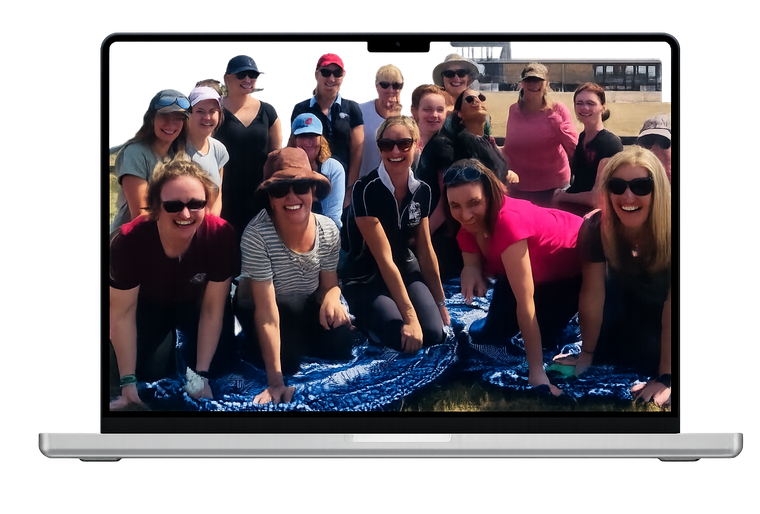
90 days in the FearLESS support community
Where Natasha personally coaches, answers and supports you, she's in there most days. Plus a live Zoom with her every month, purely for your questions. Her rule: nobody leaves without theirs answered.

Guided hypnotic integration tracks
A guided track after every module. Natasha is a qualified hypnotherapist - these cement each learning at the unconscious level, so you don't just understand it, you run it.

The 30-Day Fear Training Plan
Your first month mapped out day by day. Nothing big, nothing hard - you just wake up and do what today says. For riders who'd rather be told exactly what to do.

The Fear No More pack
For the unknown - the first outing, the new venue, the horse you can't predict. Natasha narrates, in real time, what her brain does instead of "what if". Turning dread into ooh, something to find out.

The Confidence Script
Play it on the drive to the barn, while you ride, at night, first thing. Any time you want that anchored, settled certainty of I've got this - press play.
Your investment
Yours today from $67
Mel spends just under $40 a day on a horse she was too frightened to really ride.
This is $67 a month. Less than three days of hers.
Less than most riders in this position have already spent on extra lessons, gadgets and gear trying to fix it alone.
12 easy payments
- Instant, full access from the first payment, nothing is drip-fed
- Every bonus unlocked on day one
- Protected by the full 180-day guarantee*
- 12 payments of $67
Pay in full
- Exactly the same access and bonuses
- No further payments to think about
- Protected by the full 180-day guarantee*
All prices in US dollars. $597 USD is roughly $900 AUD / £445 / €515. Cards and PayPal accepted. Access is immediate.
Six full months to prove it works.
Join today. Go through the full program. Complete the workbooks, come along to the live Q&As. Ride with it. Put it properly to the test. And if at any point in your first 180 days you can honestly say "this program has not helped me, I've done what she said and I still feel the same when I get on", email the team and you get 100% of your money back.
Most programs in this industry give you 30 days. This one gives you 180!

Who this is, and isn’t
FearLESS Mastery is for you if…
- You're tired of paying for a horse you're not enjoying
- You're fed up with bracing your way through every session
- You're confused about why the fear is still there when you've done everything right
- You feel guilty or ashamed that you're not riding as much as you want to
- You're exhausted from being stuck with this, however long it's been
- You want fun, joy, freedom and confidence to feel normal in your riding again
- You're ready to actually do it, not just understand it
It's probably not for you if…
- You'd rather keep looking for the answer in a new horse, a new bit or a new coach
- You want a quick trick rather than a real change at the root
- You aren't willing to give it about two hours a week for twelve weeks
- You're looking for someone beside you on every ride, rather than tools you can use yourself
- You're not open to trying something different from what you've already been told
- Your horse has genuinely hurt you more than once and nobody has looked at why. Sort that out first, with the right help. This isn't the thing you need today.
The questions riders always ask
I've had this fear for years. Isn't it just who I am now?
It isn't. The brain learns a new pattern the same way regardless of how long the old one has been there. Natasha has worked with riders who'd carried it for 5 years, 15 years, 30 years. The work is the same.
Time doesn't make fear permanent. It just makes it familiar. Jane was 25 years out of the saddle and is cantering again.
It was only one fall, and honestly, it wasn't even that bad. Why has it done this to me?
Because severity was never what decided it. Riders come to Natasha after horrific accidents and after falls that left nothing but a bruised hip and a bruised ego, and the ones with the small falls are often the more frightened of the two.
What matters is what your brain did with it afterwards, how many times it replayed it and how vividly. Your body reacts to a rehearsed fall almost the way it reacts to a real one, which is why a minor fall you've replayed a thousand times will out-argue a bad one you never thought about again.
Which is also the good news: a pattern that was learned this thoroughly can be rewritten. The severity of the original fall has almost nothing to do with how quickly you get free of it.
I never actually fell. I don't have a "reason". Does this still apply?
Yes, and you're in good company. Plenty of riders in the program never came off at all. Their fear arrived after a rear they sat, a bolt that ended fine, watching a friend go down, a decade off for kids or surgery, a greener horse, or genuinely nothing they can name.
The trigger varies enormously. The mechanics underneath don't vary at all, which is exactly why the same work does the job either way. And if you can't identify a cause, that's not a problem. Finding the real root is part of what happens in Phase Two, and it's frequently not the thing riders assumed.
My fear feels different. My situation is unique.
Every rider thinks this, and in one way you're right, your story is yours. But fear itself follows the same pattern in every brain. The shape of the fear is yours; the mechanics are universal, and all fear, nerves and anxiety come down to four things.
That's exactly why the same approach works for the rider with one bad fall, the rider who came back after kids, the rider with the spooky youngster, and the rider who can't explain why it showed up at all.
I've already tried other programs and instructors. Why would this be different?
Because the others treated the symptom: the shaking, the avoidance, the thought patterns. FearLESS Mastery starts somewhere else entirely: what is the actual root cause of your fear?
One rider was certain hers was the fall. It wasn't. It was a moment thirty years earlier that she'd buried so deep she'd forgotten it was there. Once that was cleared, everything else moved fast.
How much time does it actually take?
Each part of the program runs somewhere between 20 minutes and an hour, depending on what's being taught. If you can give it about two hours a week for twelve weeks, an hour to watch and an hour to integrate and post in the community, you're in good shape.
There are 168 hours in a week. Natasha's question is simply: can she have two of them?
Can this really work online, without someone there with me?
Yes, and for this particular problem, online is often better. You can pause, replay and revisit the parts that land hardest, and do the unconscious work in your own home rather than performing it in front of a coach at the arena.
You also aren't on your own: you get three months inside the FearLESS support community, where Natasha answers personally.
Do I need my own horse? What if I'm only a beginner?
You don't need your own horse, and you don't need to be riding regularly right now. It also doesn't matter where you are as a rider: beginner, intermediate or advanced. The work is on you, not on a particular level of riding.
Most of it happens off the horse. Phase Three is the riding part, so you'll want a horse to ride by the time you reach it, but that can be a share, a lesson horse, or a friend's. Jane hadn't ridden for 25 years when she started.
One honest caveat: this program teaches you to stop being frightened of a horse who probably won't do anything. It does not teach you to ride. If what you actually want is how to sit the canter or ride a leg-yield, Natasha has a different program and she'd rather point you there.
I'm in my late fifties. Am I too old for this?
No. The riders who come to Natasha are mostly over 30, and plenty are in their sixties. Being more aware of consequences than you were at twenty isn't a flaw, it's accurate, and nobody here is going to ask you to unlearn it.
What changes is what you do with that awareness, instead of letting it run the ride before you've even got on. Joanne lost her confidence after a double hip replacement and is back doing walk, trot, canter and lateral work.
I'm not confident enough to be doing something like this yet.
Natasha's answer: are you one of those people who cleans the house before the cleaner arrives?
You don't need confidence to buy the how-do-I-get-confidence program. Nobody who signs up for this feels ready. That is the entire reason it exists.
I'm outside Australia. Does that matter?
Not at all. Around 80% of Natasha's clients are outside Australia. Riders in 43 countries have been through this work.
Everything is online and self-paced, so you're never tied to a timezone. She does talk fast; the player lets you slow her down.
I'm wary of online groups. They can get nasty.
Fair. The horse world can be brutal, and most groups reflect that. The FearLESS community has one rule and it's enforced: don't be mean. Judge someone, attack someone, leave a nasty comment, and you're removed. No warnings, no debate.
It's a room full of women who are all frightened of the same thing and all admitting it. That only works if it's safe.
I can't justify spending more money on horses right now.
That's a fair thing to say out loud, so here's the honest version of the maths. A member added up one year of owning her horse and got to $14,556. She then said she'd been too scared to really ride him for two of those years.
The cost of the fear isn't the price of the program. It's another season of full bills on a horse you're not riding. And if it doesn't work for you, the 180-day guarantee means you don't lose anything by finding out.
How does the guarantee actually work?
You have a full 180 days. Go through the program, complete the workbooks, come along to the live Q&As. Ride with it and put it properly to the test. And if at any point in those 180 days you can honestly say "I've done what she said and I still feel the same when I get on", email the team and you get 100% of your money back.
Natasha's reasoning: human beings are wired to avoid decisions, especially when confidence is already low. The guarantee exists so you can make one.
What happens the moment I join?
You fill in your details and get immediate access to the member portal: the full program, the replays, the manuals, the workshop and every bonus. You'll get a welcome video from Natasha and a link to join the community, where you introduce yourself and she says hello.
You can start Phase One today.
One decision
Close your eyes for a second.
Picture a ride you came back from thinking that was fun. Not one you got through. One you actually enjoyed. What were you doing? Where were you, the woods, or somewhere you can smell the ocean? What did it feel like? Stay in it a moment longer.
Now open them. That rider isn’t a fantasy and she isn’t gone. She’s on the other side of the work, and the only thing standing between the two of you is a decision you can make in the next sixty seconds.
Big love,
Tash
© 2026 Your Riding Success. Gold Coast, Queensland, Australia. FearLESS Mastery is an educational program in rider mindset and confidence. It is not medical, psychological or veterinary advice, and it does not replace qualified instruction or supervision. Riding carries inherent risk. Always ride within your ability and wear appropriate safety equipment. Results vary from rider to rider; the stories on this page are real members’ experiences and are not a guarantee of any particular outcome.